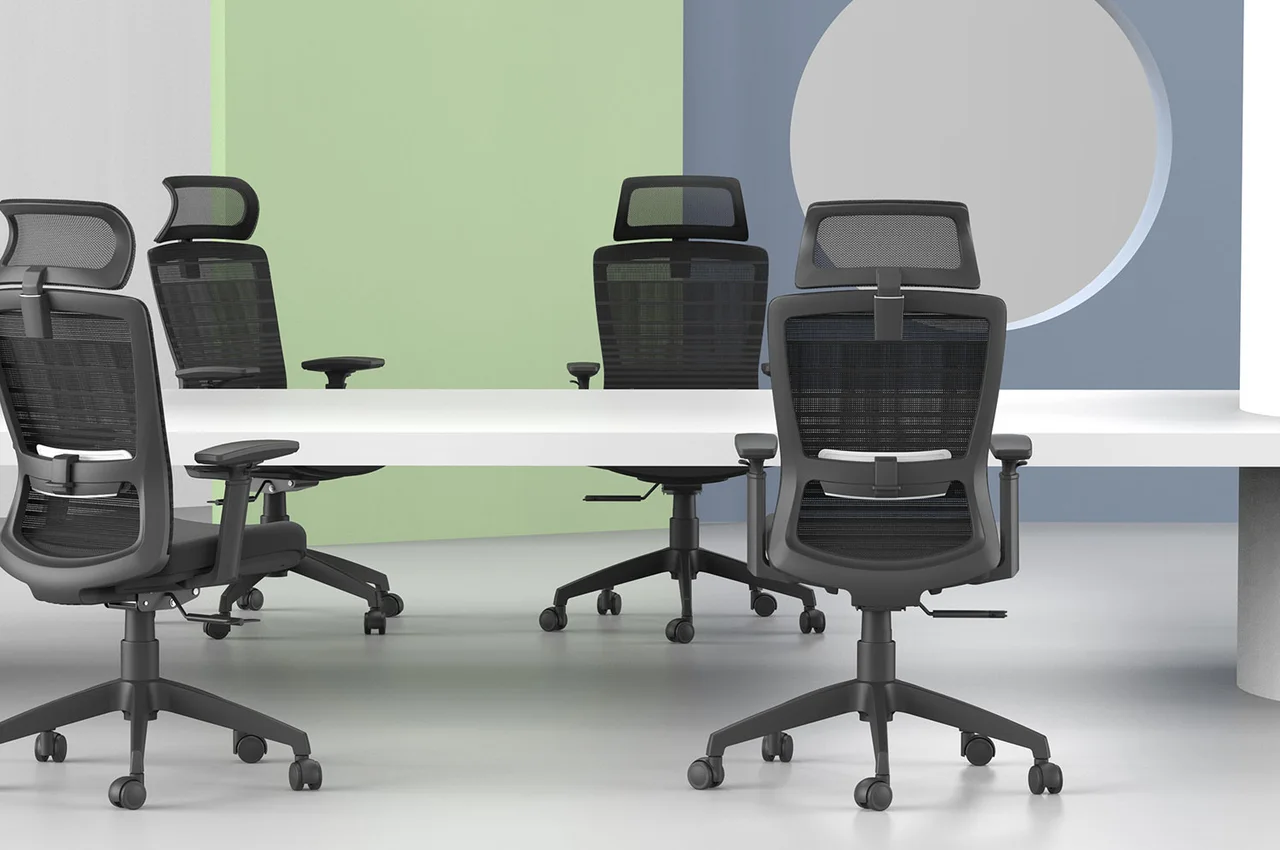
People talk about EN 1335 as if it were one test. The durability half — EN 1335-2:2018 — is the one that decides whether your chair is still working after two years in a shared office, and it is built on an assumption most buyers never see: roughly eight hours of use a day. Once you know that number is baked into the standard, the part choices stop looking optional.
What the durability part checks
EN 1335-2 sets the safety, strength and durability requirements; the test detail sits alongside it. The checks are the unglamorous ones that match how chairs actually break — seat and back fatigue cycling, a seat-impact drop (the older BS EN 1335-2 method used a 25 kg impactor), arm strength, leg and base strength, and stability so the chair does not tip when a user leans or reaches. None of these are about comfort. They are about the chair surviving the duty it was sold for.
The eight-hour assumption is the part worth dwelling on. The cycle counts and loads in the standard are set for a chair that gets sat in for a full working day, by an adult, repeatedly. A chair built to clear that is over-built for a home office used two hours an evening, and under-built for a 24/7 control room where three shifts share the same seat. The standard gives you one bar; your actual duty tells you whether to clear it comfortably or by a hair.
Where the assumption hits the bill of materials
When we read "tested to EN 1335-2" against a contract order, three parts move first. The gas column gets specced to the duty, not the showroom feel — a column that holds height under a full day of up-down cycling, not one that sinks after a year. The base gets the glass-fibre content and wall thickness to pass leg strength under repeated load, which is exactly where a cheap chair quietly gets cheaper. And the mechanism gets the cycle rating that matches the fatigue test rather than a number printed on a brochure.
The trade-off, said plainly
You can build one chair to clear EN 1335-2 with margin, and it costs more in those three parts. For an open-plan office where the chair is sat in all day by whoever sits down, that margin is warranty insurance — the few euros saved per unit come back as replacement columns and an annoyed facilities manager. For a light-use line, clearing the bar exactly is the honest spec and we will not upsell you past it. The wrong move is the middle: a chair sold as contract-grade but built to a home-office bill of materials. That is the one that comes back.
What "tested to EN 1335-2" should and should not mean
This is where we are careful with language, because buyers get burned by it. A supplier saying a chair is "EN 1335 certified" usually means one of two very different things: either a representative sample of that exact configuration passed in an accredited lab, or the chair is built the same way as something that passed once. Those are not the same claim. We say the chair is built and tested to EN 1335-2 methods, and that a third-party report can be arranged on your configuration — and we will not upgrade that to "certified" until the report exists for the unit you are actually buying. If a quote you are comparing says "certified" with no report scope attached, ask which configuration the report covers and when it was issued. The honest answer often narrows the field fast.
The reason this matters commercially: a contract buyer's procurement team can ask for the report at any point, including after delivery. A chair sold as compliant on a claim that does not hold up is a return, not a discount. We would rather scope the test into the order and price it in than win the line on a word we cannot back.
How we handle it
We build our office chairs and executive chairs to EN 1335 and BIFMA test methods, and EN 1335-2 testing can be arranged through a third-party lab at the sample stage. We book it on a representative sample, not the loaded container, because finding a stability or fatigue issue early is cheap and finding it at the port is not. Tell us the real duty — hours per day, shift use, average user — and we set the column, base and mechanism to it.
Send your models, destination and duty level through the contact form or to [email protected], and we will quote the part set against the EN 1335-2 bar rather than a marketing line. Our ODM/OEM page shows where testing sits in the schedule.