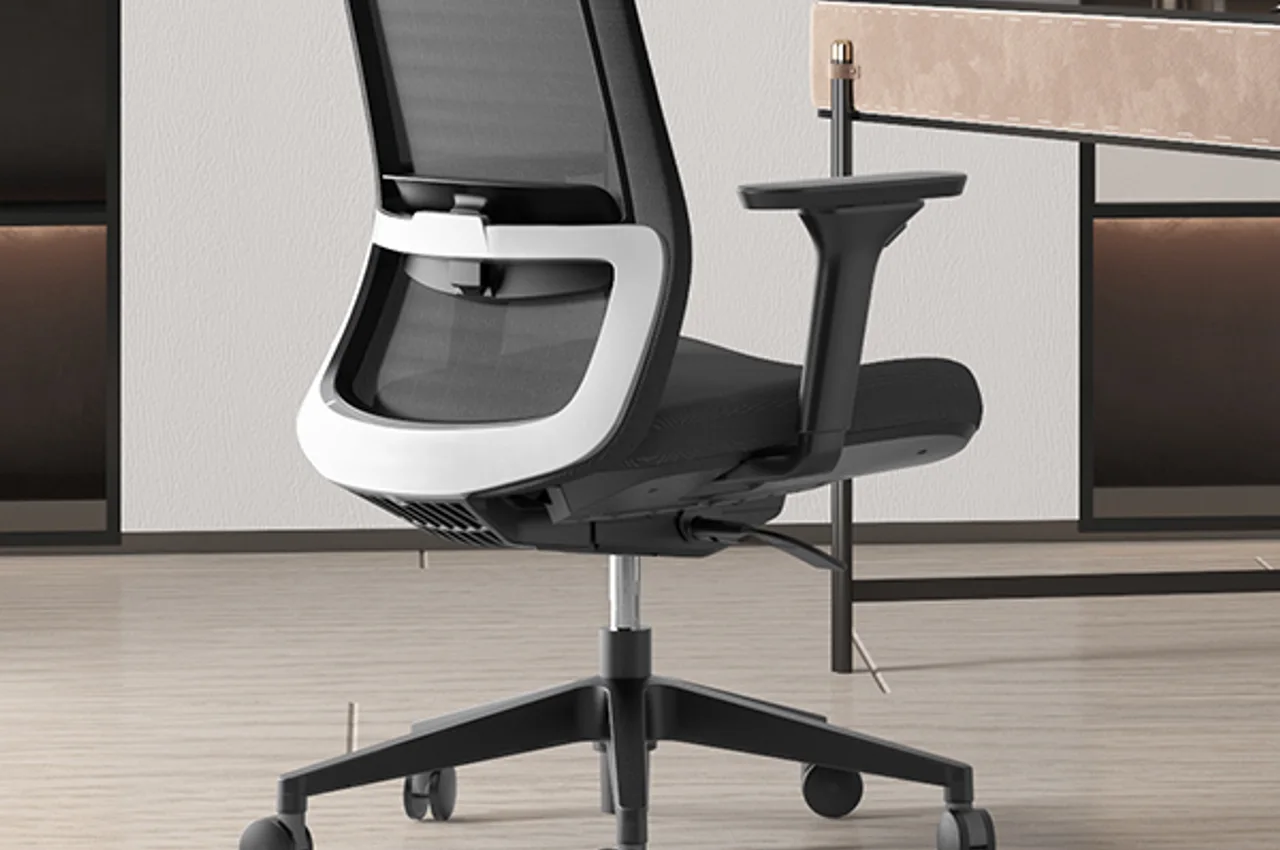
Buyers new to the European contract market often treat it as one box to tick. It is three. A contract office chair into Europe has to clear the chair standard, the chemical rules, and — the one most often forgotten — fire, if it is upholstered. We build to all three, but you have to tell us which apply, because they change the bill of materials and the timeline.
Layer one: the chair standard
This is EN 1335. Part 1 (EN 1335-1:2020+A1:2022) sets the dimensions and the type — AX, A, B or C — and Part 2 (EN 1335-2:2018) sets safety, strength and durability. A contract tender usually names a type and expects both a dimensional and a durability report. We cover the detail of the types in our EN 1335 types guide; for this article the point is just that EN 1335 is layer one, and it is necessary but not sufficient.
Layer two: REACH and the chemistry
REACH (Regulation EC 1907/2006) governs the chemicals in the chair. Two parts of it bite. Annex XVII flat-out restricts certain substances — azo dyes that can release carcinogenic aromatic amines, certain flame retardants, and increasingly formaldehyde, which the EU now regulates with emission limits. Separately, the SVHC Candidate List — well over 200 substances and updated twice a year — triggers a duty to communicate when a substance is present above 0.1% by weight. For a chair that means the dyes in the fabric, the foam chemistry, the plating on metal parts and any flame-retardant treatment all have to be in scope. Serious buyers ask for a REACH declaration, and we would rather you ask than assume.
Layer three: fire, for upholstery
An all-mesh chair often sidesteps this, which is one reason it is popular for fit-outs. An upholstered contract chair does not. In the UK, non-domestic seating is classified under BS 7176 into Low, Medium, High and Very High Hazard, with the test based on BS 5852 ignition sources — "Crib 5" is the Source 5 test that Medium Hazard contract furniture is usually held to. Across Europe the ignitability tests EN 1021-1 (cigarette) and EN 1021-2 (match flame) are the common reference. A spec line as short as "comply with BS 7176 Medium Hazard" is a complete, precise requirement, and the fabric and foam have to be chosen to meet it from the start — you cannot retrofit fire performance onto a finished chair.
The trade-off across the stack
Here is the practical tension. Every layer you add costs money and calendar time: certified Crib 5 fabric costs more than a plain weave, REACH-clean dyes and foam narrow your material choices, and each report is lab time. The mistake is paying for layers you do not need — full fire certification on a home-office export, say — or, worse, skipping a layer the buyer required and losing the container at acceptance. The cheapest path is to know exactly which layers your specific order needs before we quote, not after.
Where the timeline really goes
Buyers underestimate how the three layers stack up in the calendar, not just the budget. The chair test and the fire test are separate lab bookings on separate samples, and the REACH side depends on getting declarations from the fabric, foam and component suppliers, which is paperwork that moves at its own pace. Run them in sequence and a first order drags; run them in parallel from the sample stage and they overlap into a few weeks rather than a few months. That is why we ask which layers apply before we quote — so we book them together instead of discovering the fire requirement after the chair test is already done.
There is also a sourcing knock-on. A Crib 5 fabric and a REACH-clean foam are not every material in the catalogue, so naming the fire and chemical requirements early narrows the fabric and foam choice before you fall in love with a colour we then cannot certify. We would rather show you the compliant material range up front than walk a buyer back from a sample they have already approved.
How we work it
Tell us the destination country, whether the chair is upholstered or mesh, and any standards your buyer named. We build to EN 1335 and BIFMA methods, source fabrics and foam to the fire and REACH requirements you specify, and arrange the relevant testing per order — EN 1335, REACH declaration, and fire ignitability — at the sample stage. We will not call a chair "certified" before its final configuration is in the lab; we will tell you it is built to the standard and book the test.
Send the spec and the market through our contact form or [email protected] and we will lay out which of the three layers your order actually needs. Background on the factory is on our about page.