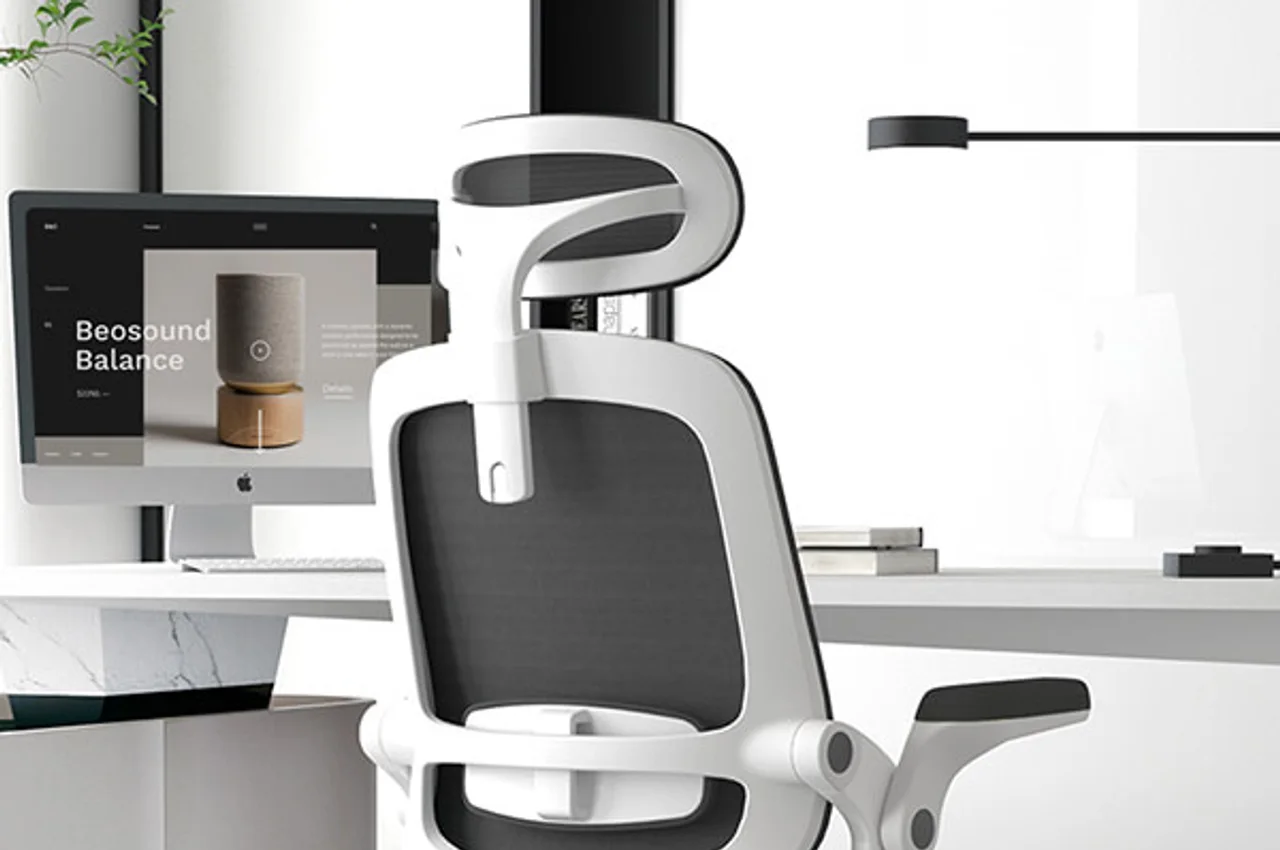
"Mesh or upholstered?" is the question we get most on a corporate fit-out, and the honest answer is that it depends on the building, the climate and the fire spec — not on which looks nicer in the brochure. What we can do is tell you how each one fails and what each one drags into the order, because that is what actually decides a fit-out.
How upholstery behaves in a fit-out
An upholstered seat is warmer, looks more "executive", and hides the frame — good for a boardroom or a client-facing floor. The cost it drags in is twofold. First, foam: comfort and life come down to density, measured in kg/m³, and a commercial seat foam wants to sit around 50–65 kg/m³. Below that the seat feels fine on the showroom sample and then compresses within a year of daily use, and you cannot tell the difference by sitting on a fresh chair — only from the spec and a cut test. Second, fire. An upholstered contract chair in Europe usually has to meet a fire requirement — BS 7176 hazard classes in the UK, EN 1021 ignitability elsewhere — which means the fabric and foam have to be chosen for it from the start.
How mesh behaves
A good mesh holds tension for years and runs cooler, which matters in a warm building or a dense open-plan floor where upholstered seats trap heat. It is lighter, so it ships better. And because it is not an upholstered composite, an all-mesh chair often sidesteps the upholstery fire test entirely — one reason it is so common in modern fit-outs. Mesh fails differently: not at the surface but at the frame and the edge binding, so a cheap mesh stretched on a thin frame sags at the corners. The mesh is rarely the weak point; the frame around it is.
The trade-off, and the compromise
For a hot building, a dense floor, or a budget-conscious fit-out that wants to keep the fire scope simple, we lean mesh. For boardrooms, executive offices and client areas where a padded, finished look is expected, upholstery wins — but only if you hold the foam density line and accept the fire requirement. The compromise that generates the fewest complaints across a mixed floor is a mesh back with an upholstered seat: breathable where the body heats up, cushioned where it bears weight, and a smaller fire scope than a fully upholstered chair. It is not a fence-sit; it is the configuration we ship most for general office floors.
Cleaning, life-cycle and the cost nobody quotes
The number that decides a fit-out is rarely the FOB price; it is the cost over the chair's life, and cleaning is part of that. An upholstered seat in a busy office stains and absorbs spills, and once a fabric is grubby the chair looks tired even if the frame is fine — facilities teams replace chairs that are mechanically sound because they look worn. A mesh seat wipes down and shrugs off spills, which is why high-traffic and shared areas trend mesh. Against that, mesh can feel hard to some users over a full day, and an executive who expects a padded seat will not accept it. So the life-cycle argument cuts both ways: mesh wins on cleaning and longevity of appearance, upholstery wins on perceived comfort and status.
The other quiet cost is shipping. Mesh chairs are lighter and pack tighter, so you often fit more per container before you cube out, which lowers the landed cost per chair. A bulky upholstered executive chair cubes out faster. On a large fit-out spread across containers, that difference is real money, not a rounding error — worth putting on the same spreadsheet as the unit price.
How we quote it
Tell us the building type, the climate, and whether a fire standard applies, and we will recommend mesh, upholstered, or the hybrid — and we quote foam density in writing rather than calling it "high-density" and leaving it vague. The fire and chemical side ties into our European contract spec guide; the seat construction ties into the adjustability your floor needs. We build our mesh task chairs and upholstered ergonomic chairs to EN 1335 and BIFMA methods, with testing arranged per order.
If you want a single rule of thumb: open-plan and high-traffic floors lean mesh or the mesh-back hybrid; boardrooms and executive offices lean upholstered with a held foam density and a named fire rating. But a rule of thumb is not a spec, and a real fit-out usually mixes both across the building — which is exactly what we plan for. Send your fit-out brief — building, headcount, any fire standard — through the contact form or [email protected], and we will steer the construction for that job specifically.